

Assembly Line
What a nail salon in Vietnam revealed about labor, currency, and shifting privilege.

The woman stood outside the storefront calling “foot massage, foot massage” to anyone who slowed down. I was looking for a nail salon—something I do regularly, wherever I am—but this block had so many competing signs that I’d been walking for twenty minutes trying to decide. When I said no thanks, she pivoted immediately: “Manicure? Pedicure?” She pointed to a folding sidewalk sign listing services I hadn’t noticed. “We do that too. Come in, come in.”
I was tired of walking. The salon looked clean through the windows. I said okay.
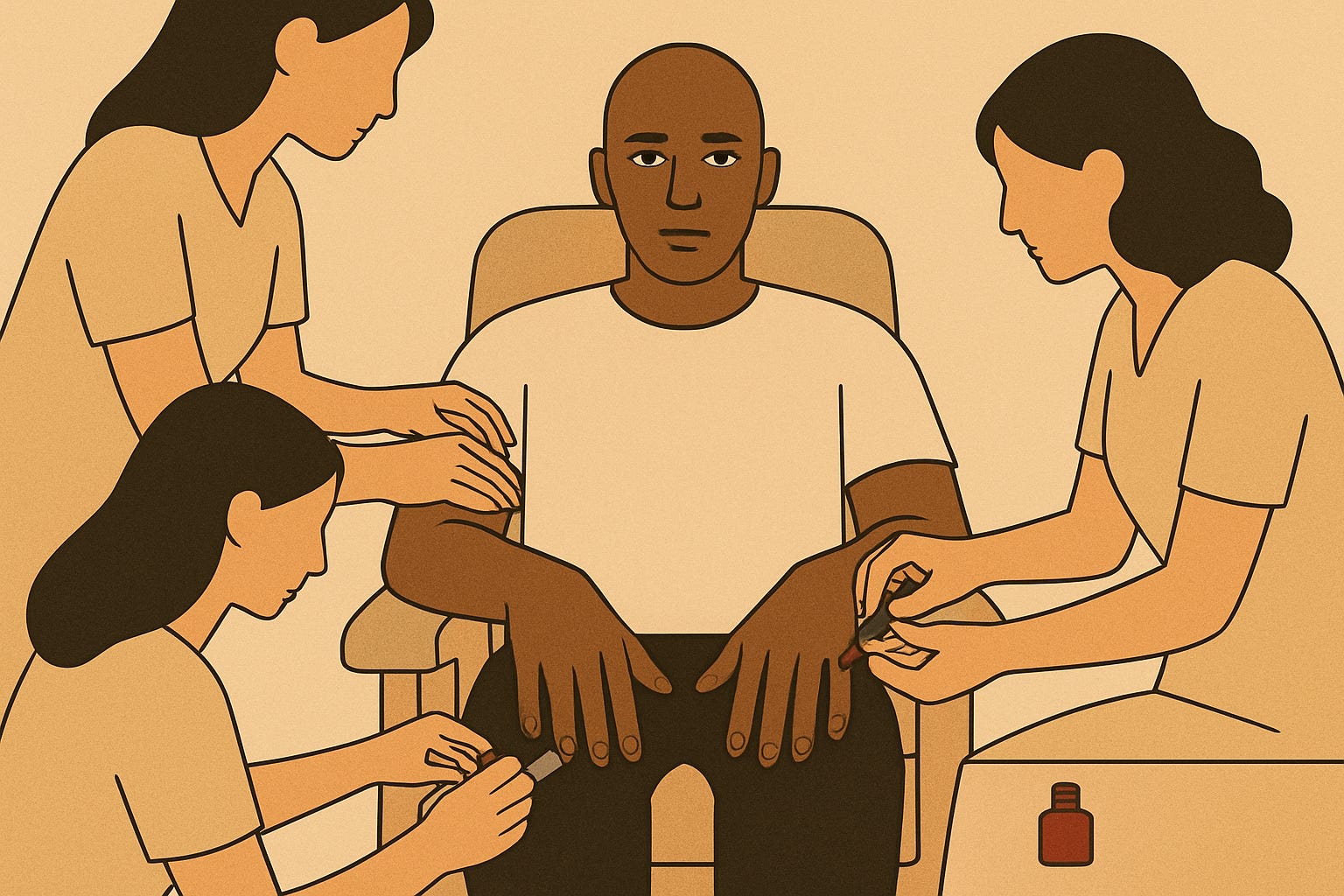
At the door, I took off my shoes. They ushered me to a chair and immediately three women appeared—one at each foot, one at my hands. “We can do foot massage too for extra,” one said. “Have you out in an hour.” I hadn’t asked for a foot massage, but I also hadn’t asked for three people. I was tired, agreed, and before I could process what was happening, they were already working. One scrubbing my feet, another massaging my calves, a third examining my cuticles. They moved with efficiency, switching positions halfway through, speaking to each other in Vietnamese I couldn’t follow, but felt coordinated.
I’ve gotten my nails done hundreds of times. Los Angeles, Dublin, Paris. It’s a small thing I do for myself. I type all day. I’m always looking at my hands, and having them done makes me feel confident in a way that’s hard to explain. In Ho Chi Minh City, I’d been noticing how differently I was treated in stores, but the nail salon was the first place where I wasn’t just observing, but participating. Usually it’s one person, taking their time, and I leave relaxed. This felt different. I felt like a car being assembled. Not in a bad way, exactly, but overstimulating. Mechanical. While they worked, the woman who’d gotten me to come inside went back out to the street to get more customers.
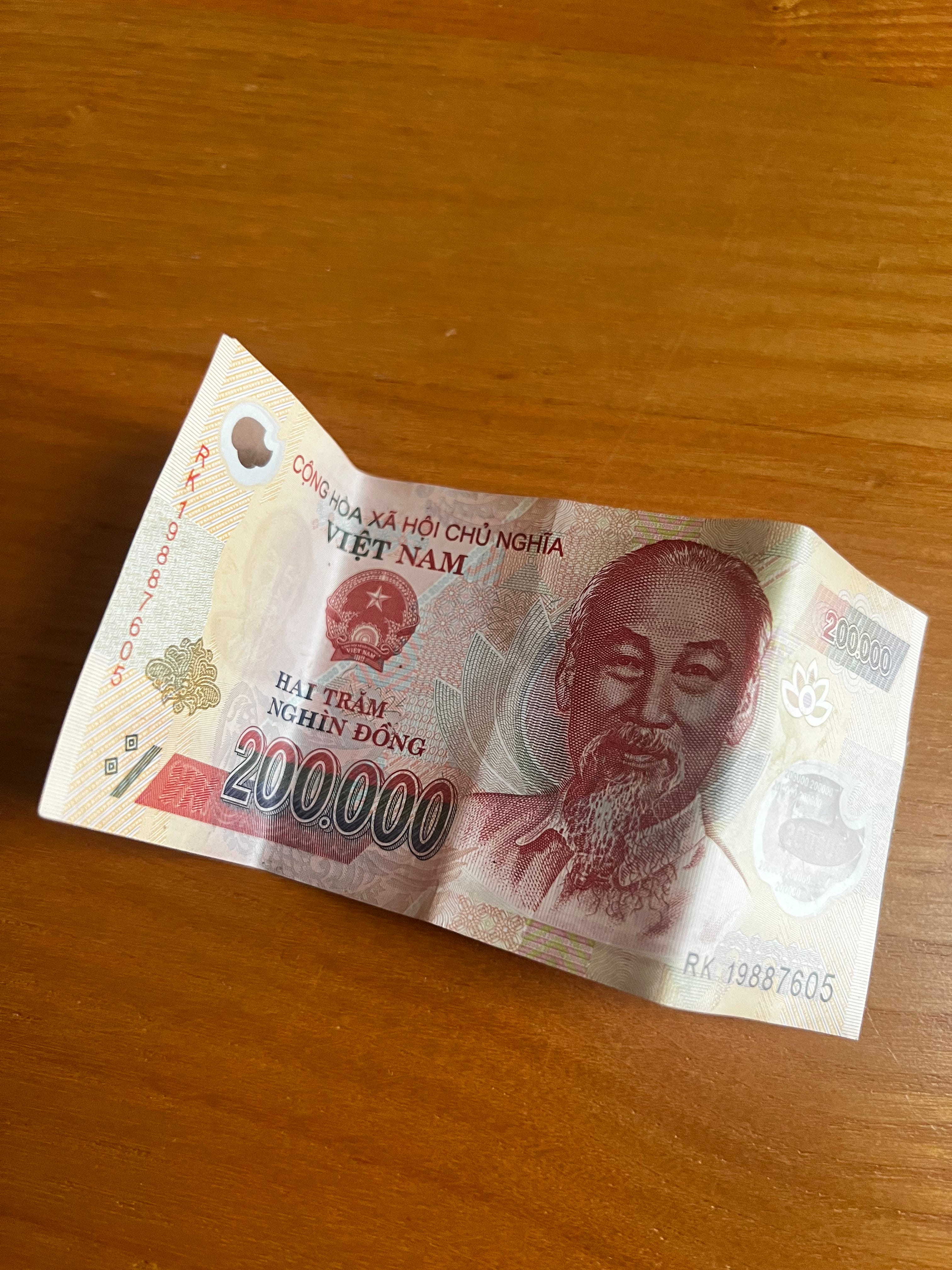
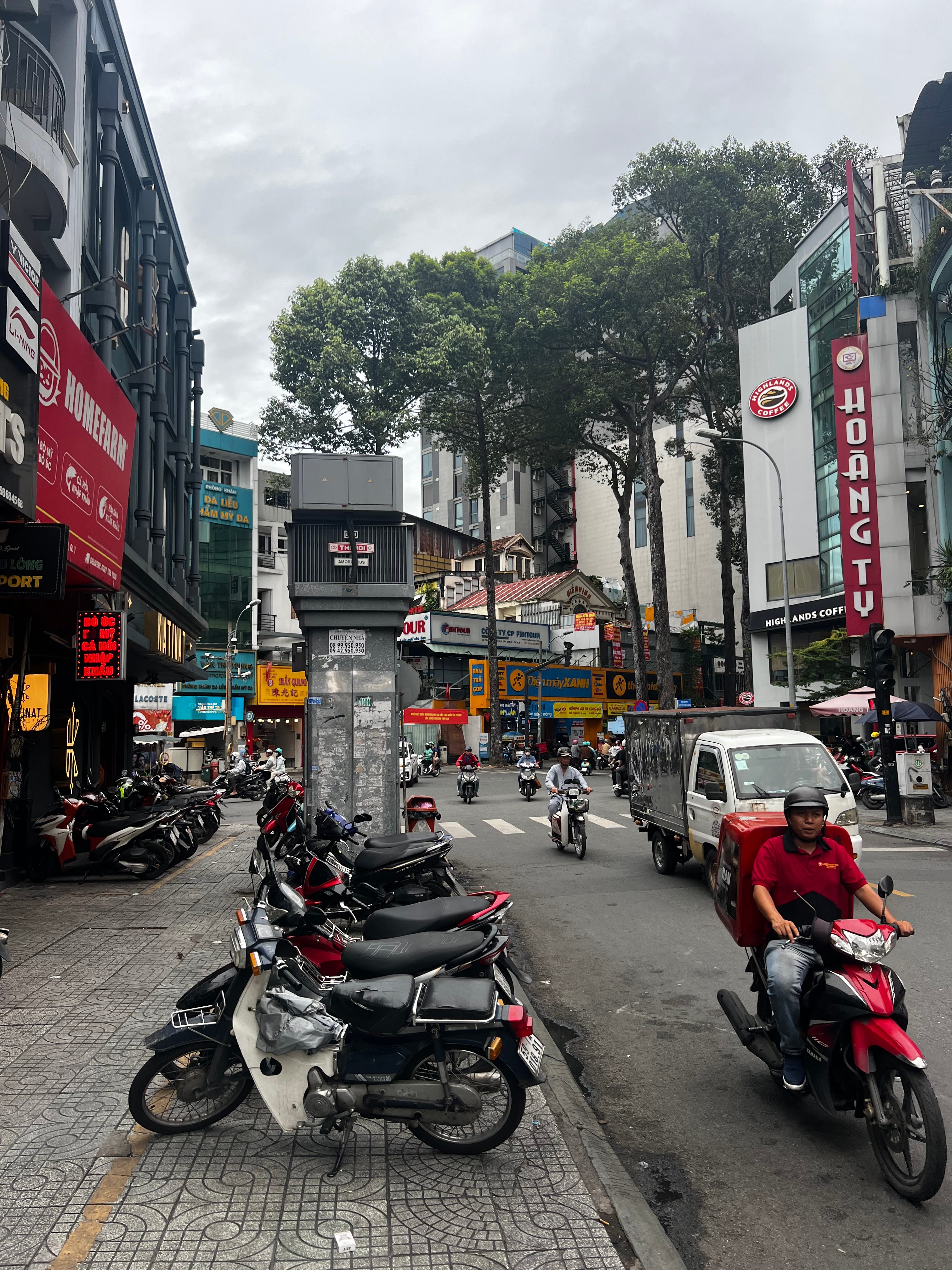
When they finished, I paid what they asked—around 1.3 million dong, maybe $49. Then I gave each of them 200,000 dong in tips. Their eyes widened slightly before they smiled and thanked me. I walked out into the humidity of District 1, past the scooters and street vendors, trying to figure out why I felt so strange.
I kept thinking about how I’ve been on the other side of this transaction my entire adult life.
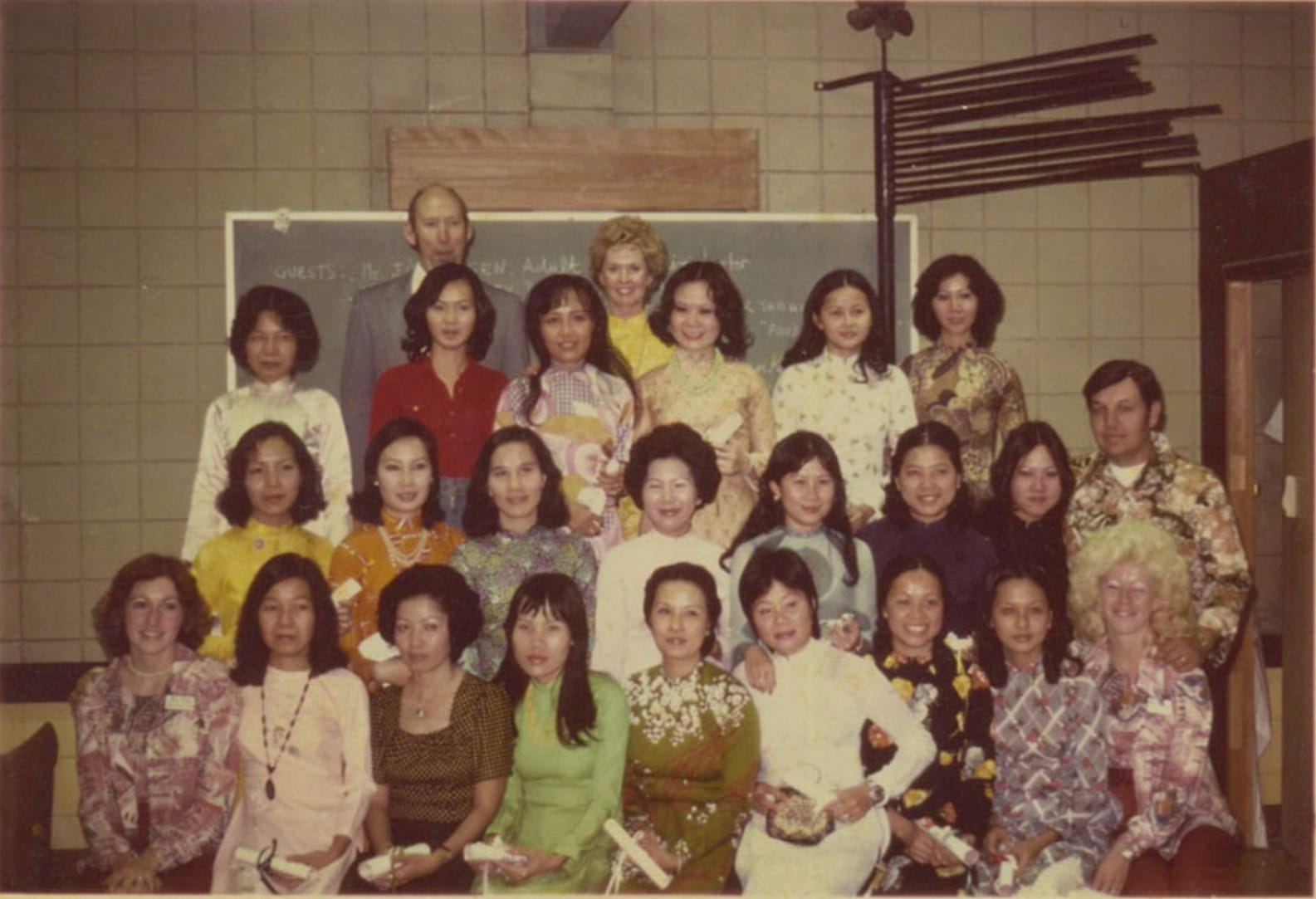
Every nail salon I’ve been to in the U.S. has been run by Vietnamese women. Same in Dublin. Same in Paris. I know the history. Like how Vietnamese refugees, trained by actress Tippi Hedren in the 1970s, built an entire industry across America. I’ve reported on immigrant labor economies. I know how remittances work, how money flows from the diaspora back home to build houses and pay for school fees and buy scooters for younger brothers.
But I’d never been in Vietnam. I’d never sat in a nail salon in the country where this all started, watching women practice the same gestures that would travel with their cousins and daughters to strip malls in Los Angeles, where they’d earn 10 times as much doing the exact same work.
The exchange rate is about 25,000 dong to one U.S. dollar. My tip (generous by Ho Chi Minh City standards, enough to make their eyes widen) was roughly $8 per person. The whole service, including my attempted generosity, cost less than a basic manicure and pedicure in L.A. (which usually runs anywhere between $60 to $100 without tip).
I understood suddenly that I was the American in the room. Not just American by passport, but American in the way that matters here. The person with the strong currency, the one for whom $60 is a treat, but not a hardship, the one who can decide to be generous because the numbers are abstract to me in a way they aren’t to the women whose hands are scrubbing strangers’ feet all day.
This is disorienting when you didn’t grow up with money.
Both my parents worked when I was a kid. My dad had two, sometimes three jobs—I barely saw him. My mom worked full time, then came home to make dinner and get us ready for school. I was the oldest, so I watched my siblings after school. Typical latchkey kids. When I got into college in New York, they couldn’t afford to send me. We didn’t take family vacations. I’ve experienced homelessness twice in my life.
I worked my way through undergrad and two master’s degrees. I worked to be able to travel, to live in Dublin, to have the kind of life where getting my nails done regularly is just something I do. I earned what I have.
But sitting in that salon, none of that mattered. I carried an American passport and American dollars, and that was enough. Geography made me privileged in ways that had nothing to do with my own history, my own work, my own relationship to poverty and instability in the United States.
Being Black in America means moving through the world with a specific kind of awareness of how you’re seen, aware of systems designed to disadvantage you, aware of the barriers that exist regardless of how hard you work. But being Black American abroad is different. The passport seems to matter more than the skin. The dollars matter more than the history. I’ve traveled enough now to recognize the shift, the way my relationship to privilege changes depending on which side of the ocean I’m standing on.
In HCMC, I was just American. And American meant power.
The woman who’d been working on my right foot switched to my left halfway through. She and her colleague moved in sync, no words needed. They’d done this thousands of times. I watched their hands. Efficient, practiced, quick. The same hands that do this work in Los Angeles, in Houston, in Atlanta. The same gestures carried across the Pacific and replicated in strip malls next to Subways and tax preparation offices.
Some of these women will stay in Vietnam. Others will leave. Maybe they already have visas pending, maybe they’re saving money, or maybe their children will go instead. When they arrive in California or Texas or Virginia, they’ll earn more, but pay more. They’ll work the same hours doing the same work, but they’ll send money home to build the houses their mothers will live in, to pay for the education their nieces will get, to support the local economy that will, in turn, support more women learning to do nails, learning to smile at customers, learning to say “have you out in an hour” in English.
I participate in this system every time I sit down in a nail salon in Los Angeles. I’ve always known that. But I’d never felt it the way I felt it in Ho Chi Minh City. The weight of being the person with the stronger currency, the one whose comfort is the product, the one whose $60 moves differently in the economy than it does for the women whose labor I’m buying.
Tourists who brag about haggling—getting the price down to almost nothing because they can, because they know the vendor needs the sale more than they need to save $2—have always bothered me. But I realized in that moment that I don’t get moral credit for paying full price plus a generous tip. That’s not virtue. That’s just the bare minimum of acknowledging the imbalance that already exists.
I’ve been thinking about my hands a lot since I left HCMC.
They look good. The manicure held up well through the rest of my trip. I’m looking at them now as I type this, having had two since then, and they look clean, professional, and cared for. That’s what I wanted. That’s what I always want.
But I can’t stop thinking about the three women who worked on me in assembly-line formation, and how one of them went back outside to call “foot massage, foot massage” to the next tourist walking by. I think about the woman in Los Angeles who usually did my nails, who I saw every couple of weeks, who asked about my work and told me about her daughter. I wonder if she has family in Vietnam. I wonder if she sends money home. I wonder if she ever thinks about the fact that she’s doing the same work her grandmother might have done in HCMC, except now she’s doing it in DTLA for clients who’ve never thought about how this industry was built.

What I’m carrying forward from HCMC isn’t guilt, exactly. It’s more like a clearer map of where I stand in relation to the systems I move through. I can’t opt out of being American abroad. I can’t make the exchange rate fairer by tipping more. I can’t undo the history that created this industry or the economic forces that keep it running.
But I can know it. I can see the loops of money and migration, the way labor moves across borders to follow capital, the way my comfort depends on someone else’s efficiency, the way privilege isn’t fixed, but geographic, in the same way I carry multiple identities that contradict each other depending on where I’m standing.
Next time I sit down in a nail salon in Los Angeles or Paris or wherever I happen to be in the world, I’ll remember the three women in HCMC. I’ll remember taking my shoes off at the door. I’ll remember the overstimulation of being worked on from three directions at once, and how I couldn’t relax because I was too aware of the transaction happening around me. I’ll remember that this industry exists because of displacement, because of war, because of women figuring out how to survive in a new country by turning care into commerce.
And I’ll sit there with my hands out, waiting for the polish to dry, and holding that knowledge without an answer for what to do with it. ⁂